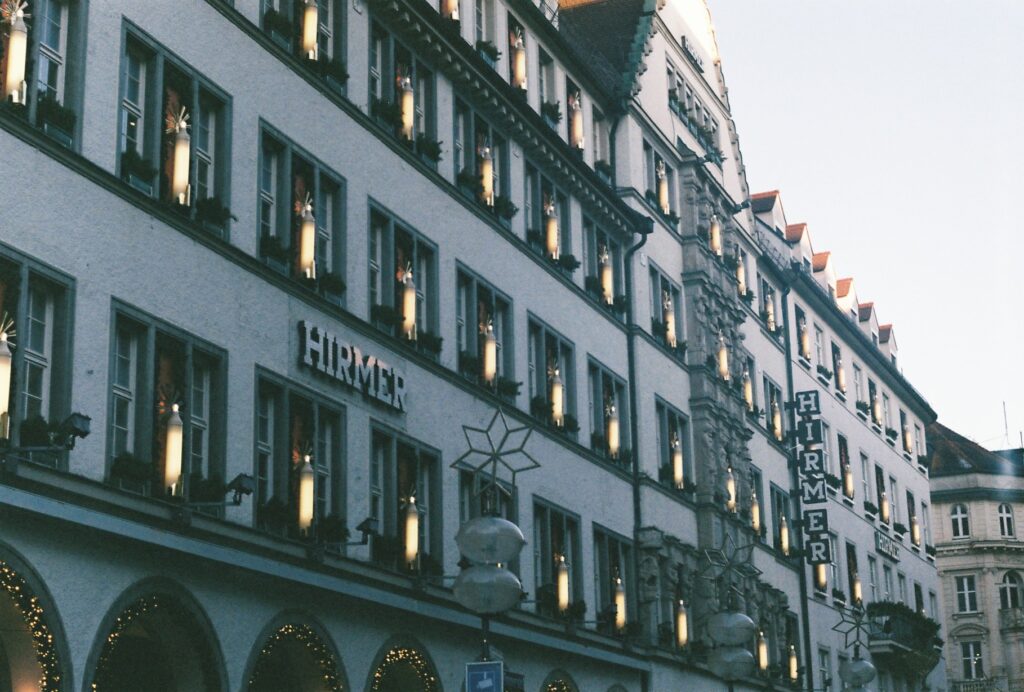
Some journeys begin with a plan.
This one began with winter.
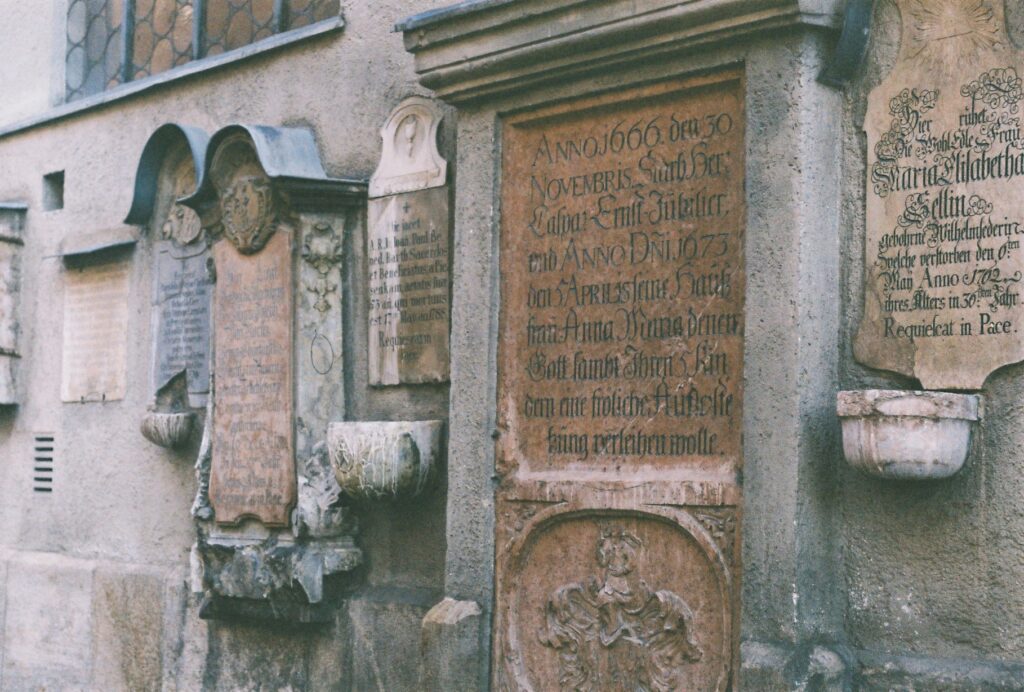
Munich is the capital of Bavaria — Germany’s largest state by area — resting quietly in the country’s southeast. Its history reaches back to the Middle Ages, but in December, history doesn’t announce itself loudly. It waits. It settles into stone, streets, and breath.
For three days, I walked Munich without urgency.
Film in the camera.
Cold in the air.
Nothing to collect — only to notice.
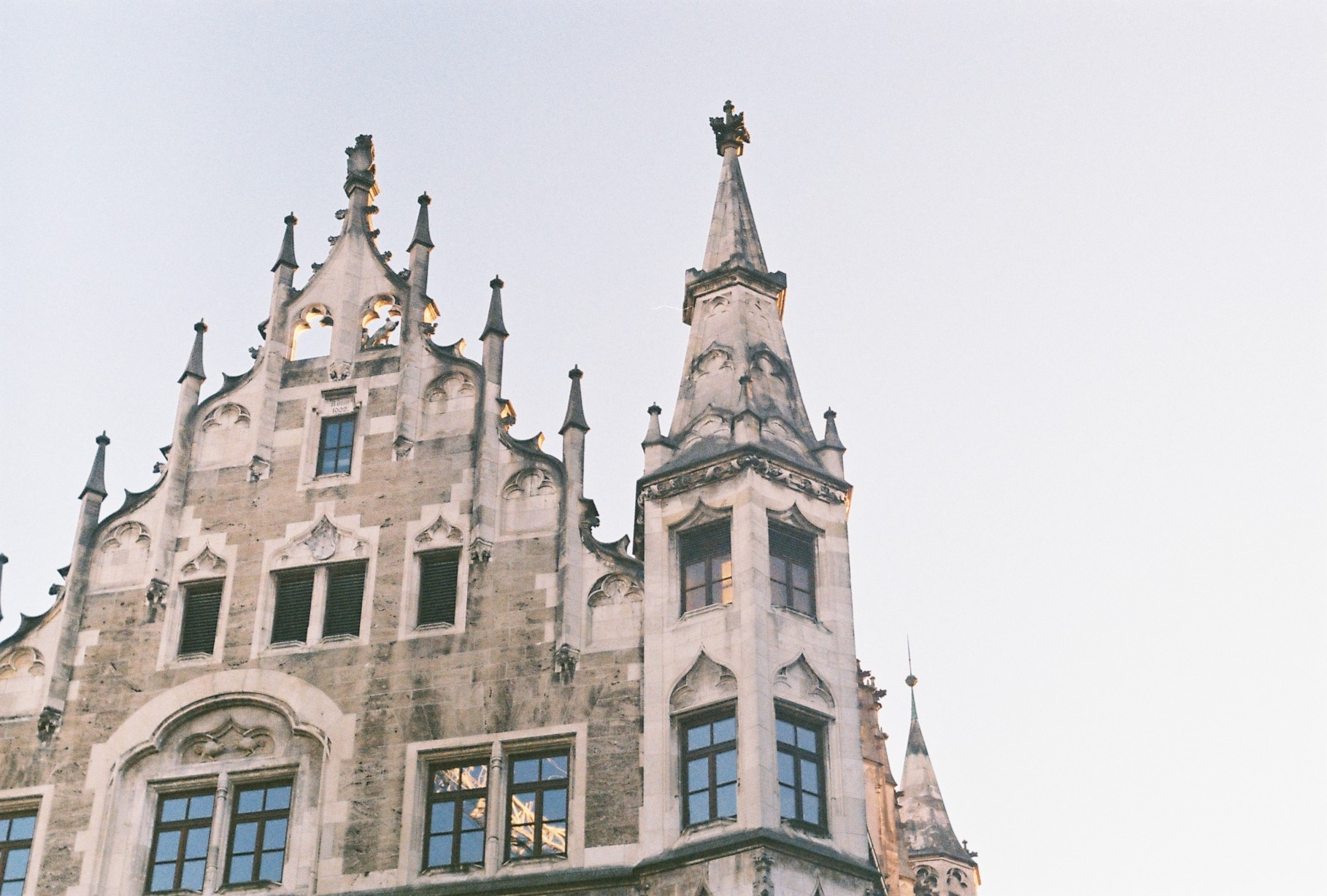
Early morning light, somewhere in the Bavyera.
Winter and the City’s Core
Munich softens in winter.
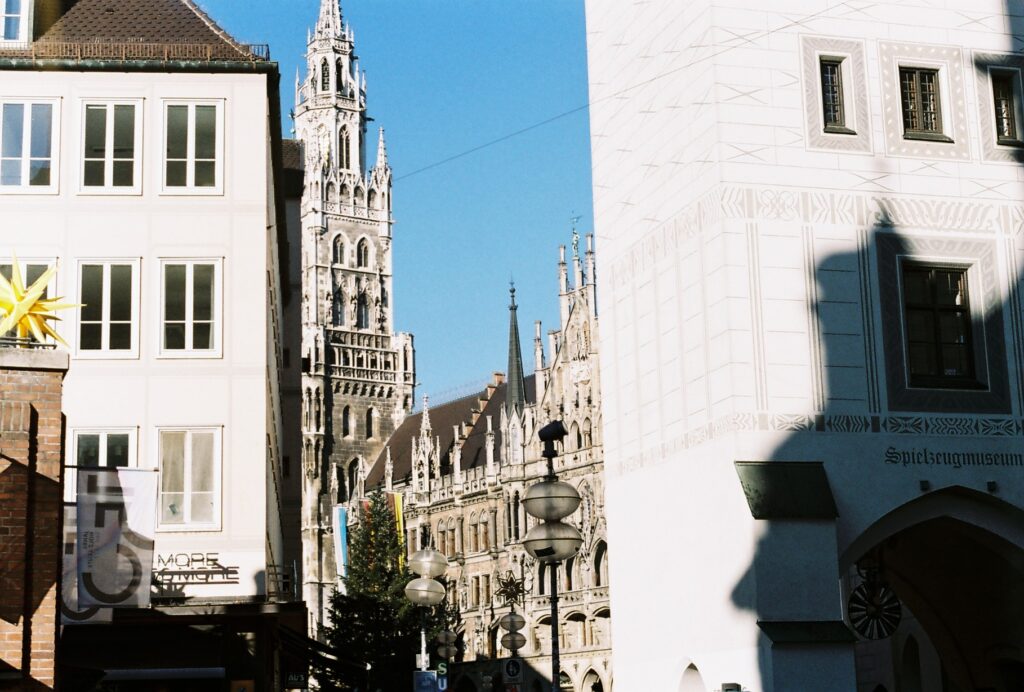
Tourist crowds thin, cafés lower their voices, and the city folds inward. Marienplatz — the city’s heart — becomes less of a spectacle and more of a meeting point between eras.
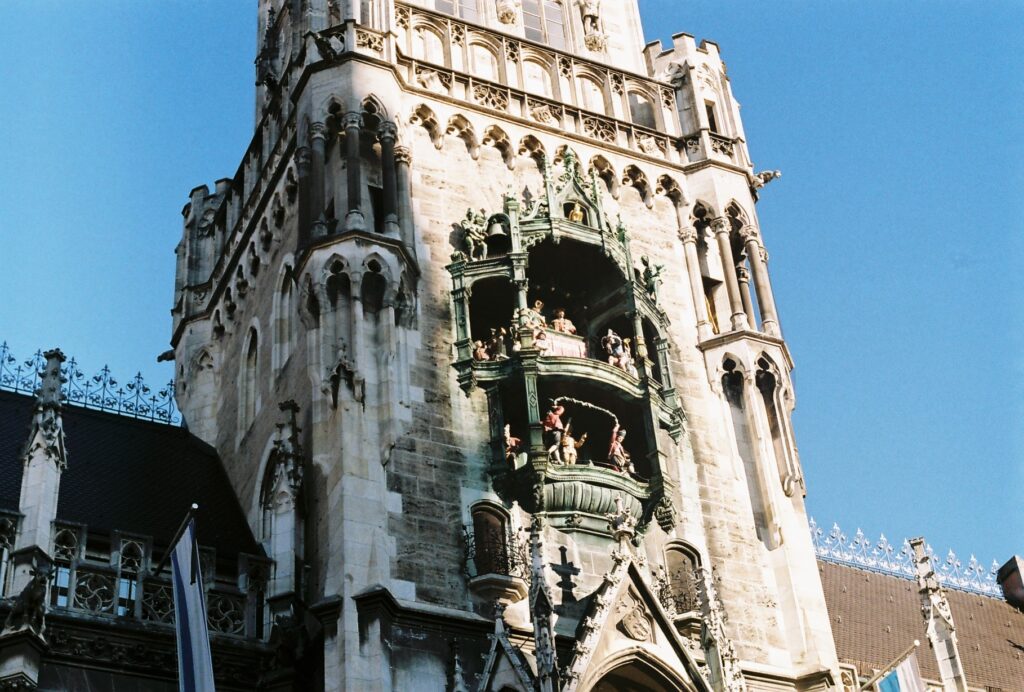
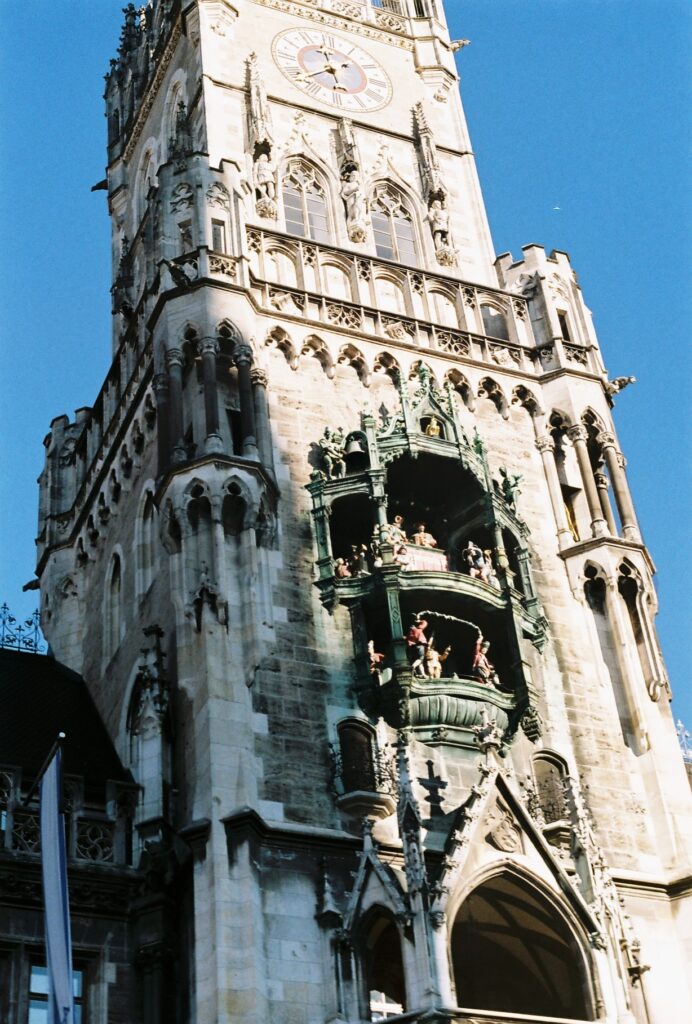
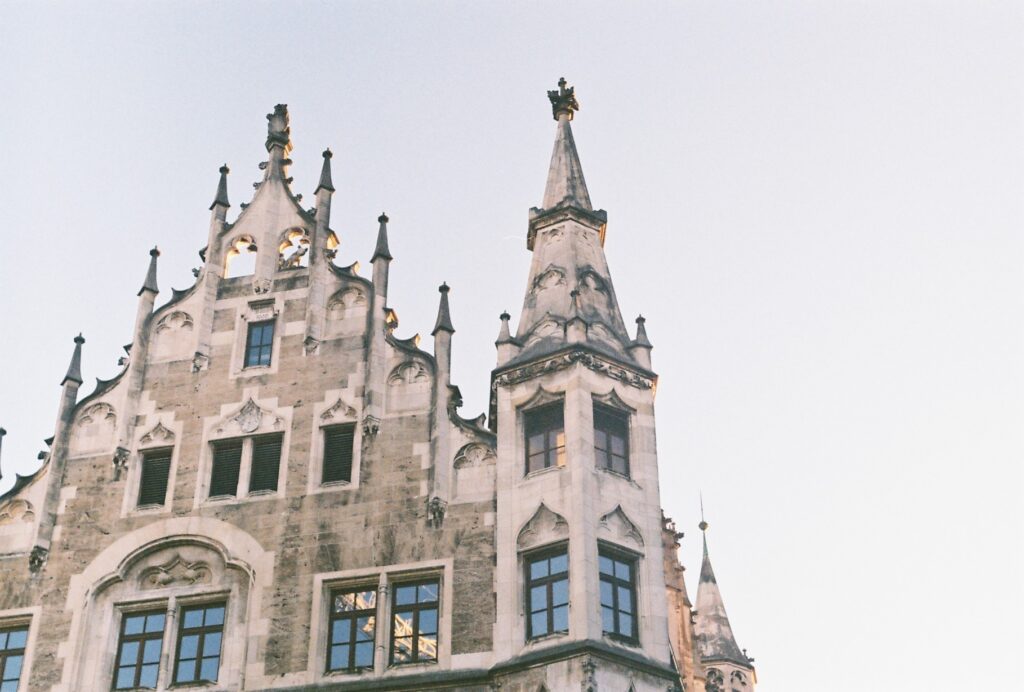
The Neo-Gothic Neues Rathaus stands with quiet confidence, its famous Glockenspiel continuing its ritual as it has for generations. Around it, Munich balances history and daily life without effort. This is not a city that performs — it exists.
A Slow Route Through the Old Town
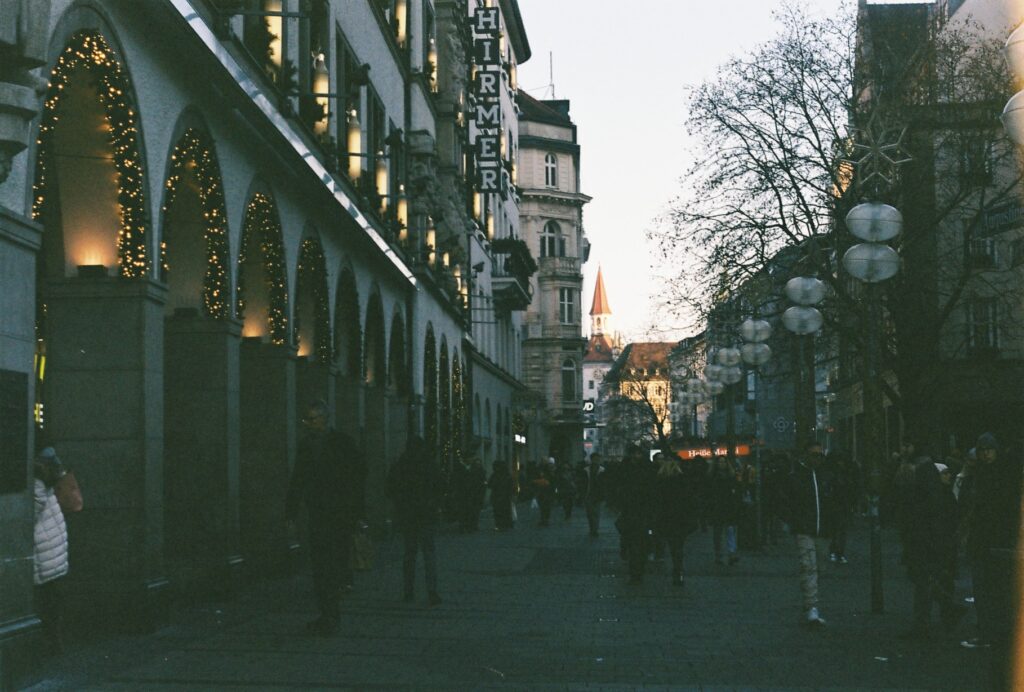
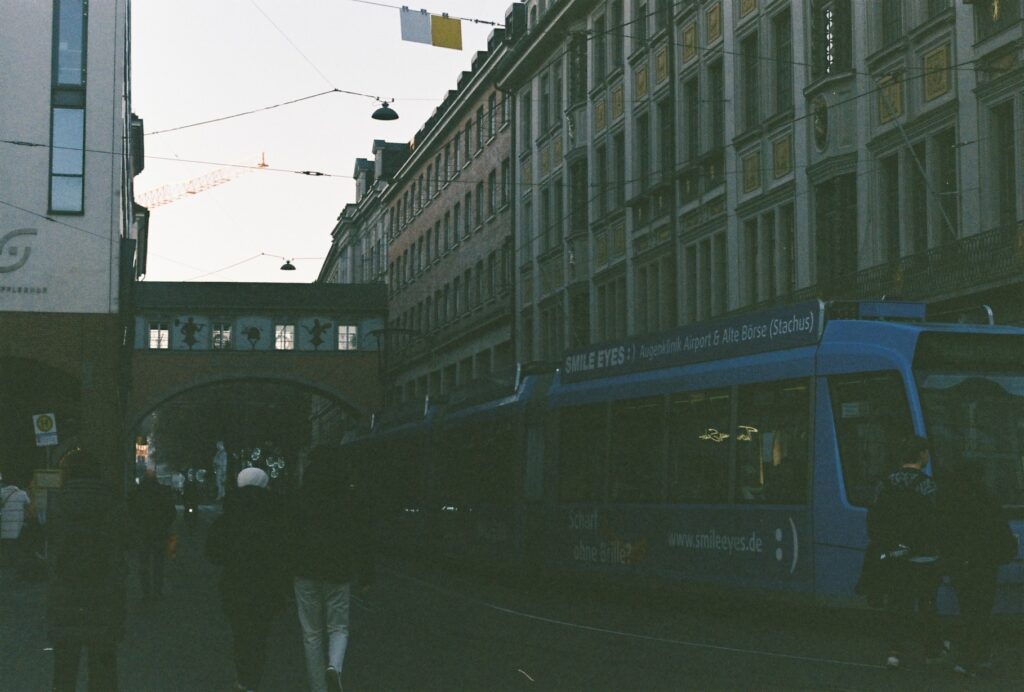
The walk begins at Karlsplatz (Stachus) and moves gently toward Marienplatz. It’s a route best taken without hurry, letting buildings reveal themselves one by one.
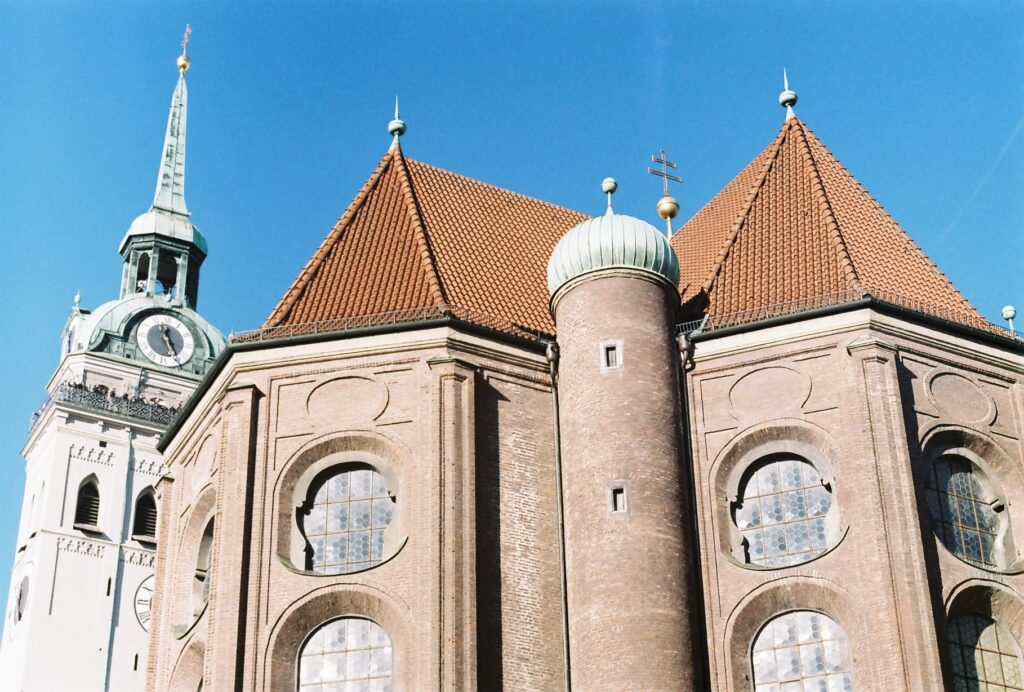
Bürgersaalkirche appears modest at first — a Baroque structure originally designed as a civic hall. Built in the 17th century, damaged during World War II, and later restored, it carries the weight of survival quietly.
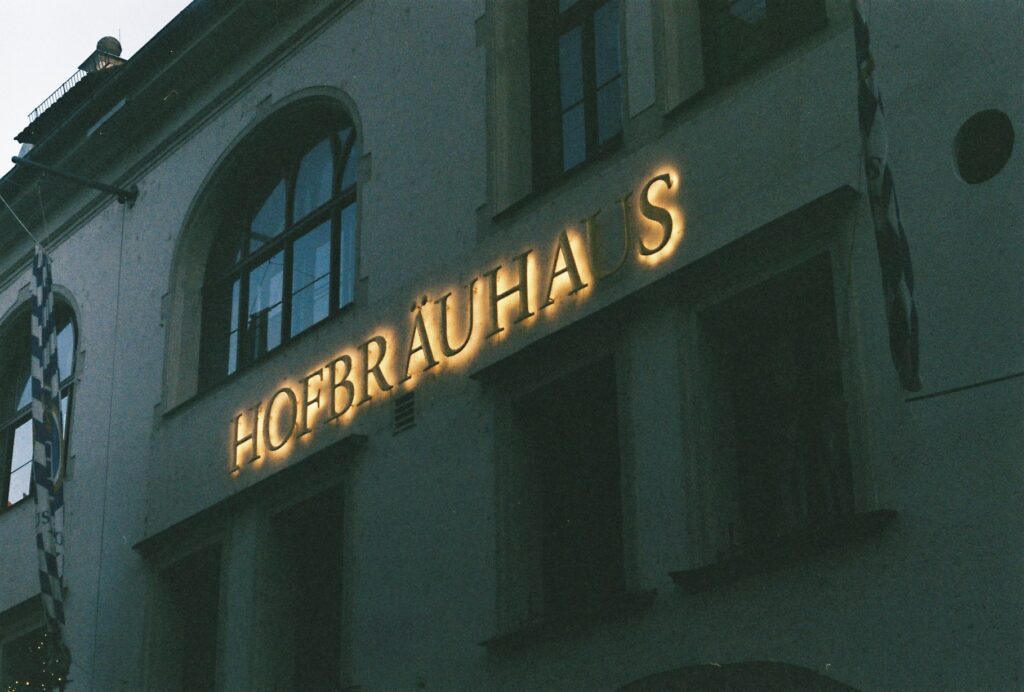
A few steps further, Augustiner Stammhaus reminds you that Munich’s history isn’t only written in stone, but also in shared tables. Founded by monks in 1328, Augustiner-Bräu is the city’s oldest brewery — tradition here isn’t preserved behind glass, it’s lived.
Faith, Power, and Stone
St. Michael’s Church rises with Renaissance confidence. Built between 1583 and 1597 for the Jesuit Order, it stands as a symbol of Bavaria’s role in the Counter-Reformation. Beneath its floor rest members of the Wittelsbach dynasty — including King Ludwig I and the “Mad King,” Ludwig II. Power, belief, and legacy converge here, quietly.
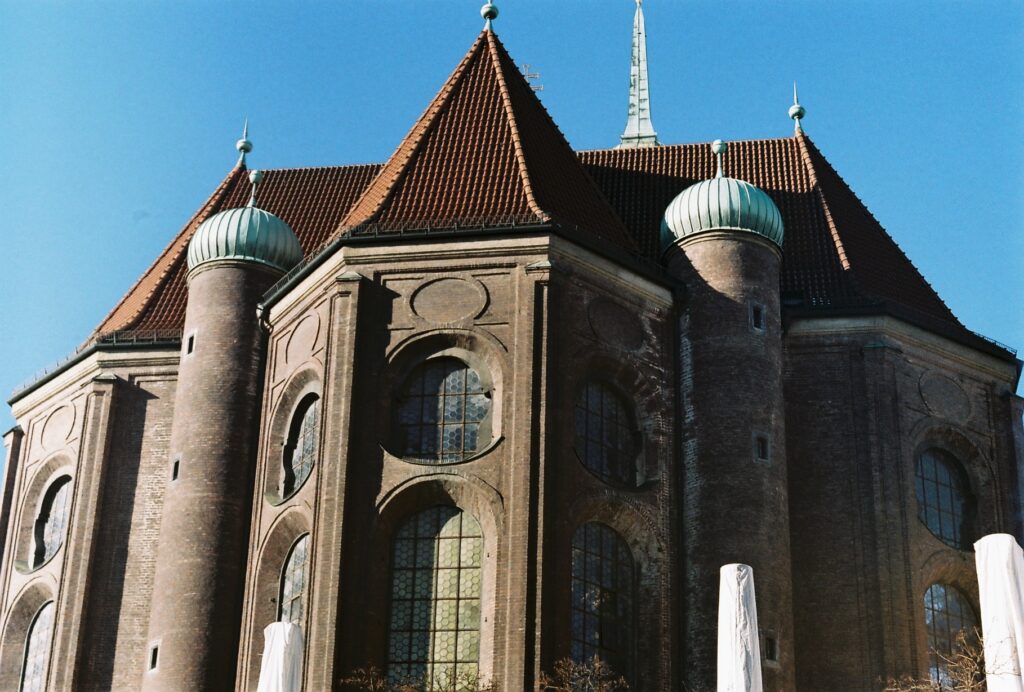
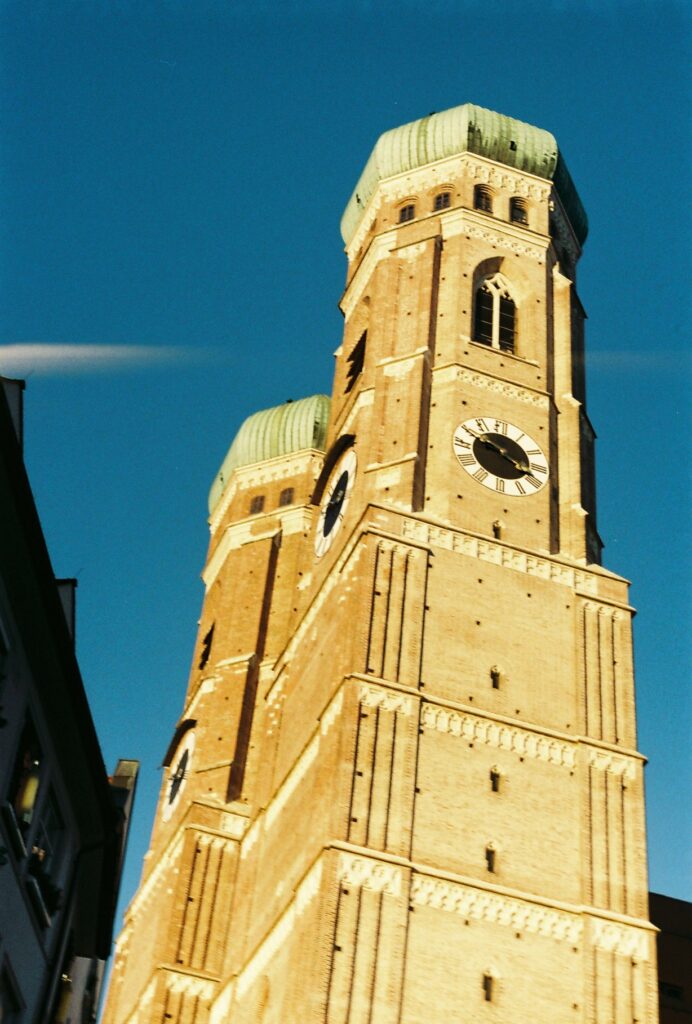
Nearby, Frauenkirche dominates Munich’s skyline with its twin towers. Built in red brick in the late Gothic style, it defines the city’s silhouette so completely that no surrounding building is allowed to rise higher. Inside, light plays carefully with space — and somewhere near the entrance, the legendary Devil’s Footprint waits to be noticed by those who know to look down.
Marienplatz, Again
Returning to Marienplatz, the city feels complete. The golden statue of Mary watches over centuries of movement — markets, protests, celebrations, ordinary days. This square has seen Munich change, yet remain itself.
December suits it.
Evening, Film, and Leaving
Evenings arrive early in winter. Wet pavement reflects streetlights, shadows stretch longer, and the city becomes still again. Analog film demands patience — and Munich, in December, rewards it.
Three days were enough.
Not to know the city —
but to feel it.
Some cities reveal themselves slowly.
Munich does this best in winter.